
Why Concrete Durability Matters for Perth Industry
Industrial concrete in Perth is not just a surface people walk or drive on; it is part of how a business runs every day. When slabs fail, work slows or even stops, and that hurts output and profit very quickly.
For warehouses, workshops, food processing plants and logistics hubs, damaged floors can mean:
- Downtime while areas are blocked off
- Disrupted traffic paths for forklifts and trucks
- Safety risks from trips, slips and uneven joints
- Extra pressure on other parts of the site
Perth businesses also deal with local conditions that are tough on concrete. Heavy vehicle loads, frequent pallet movements, specialist machinery and long, dry periods all put extra stress on slabs, hardstands and loading docks. If the concrete is under-designed, the surface wears out faster than expected.
When industrial concrete is properly designed and built, it becomes a long-term asset instead of an ongoing headache. A durable floor or hardstand supports safety, keeps operations smooth and protects the long-term value of your site.
How Perth's Climate Impacts Industrial Concrete Performance
Perth has a clear pattern through the year, with wetter months around mid-year and hot, dry periods taking up much of the rest. Those shifts matter a lot to how concrete behaves on industrial sites.
Cooler, wetter periods often bring:
- More moisture sitting on slabs and around joints
- Water finding its way into small cracks and weak spots
- Softening of poorly drained subgrades under heavy wheels
Hot months then bring strong sun, intense surface heating and low humidity. That can lead to:
- Shrinkage and expansion at the surface
- Faster drying and higher risk of early cracking
- Extra joint movement and edge breakdown where traffic is heavy
External yards, driveways and hardstands feel this the most, because they are exposed to both heavy loading and the weather. That is why it is important to match the concrete mix, curing method and joint detailing to Perth conditions, not just to a generic standard.
Thoughtful choices help a lot, such as:
- Mix designs that manage shrinkage and reduce permeability
- Curing that keeps moisture in long enough for the slab to gain strength properly
- Joint layouts and sealants that allow safe movement without tearing the surface apart
Key Factors That Determine Industrial Concrete Durability
Durability starts below the slab. Even the strongest concrete will struggle if the base is not ready for industrial work.
Good base preparation usually includes:
- Proper compaction of the subgrade and base course
- Thought-out drainage paths so water does not sit under the slab
- Vapour barriers where needed to reduce rising moisture
The concrete itself then has to match the loads and use. Strength is only one part. Aggregate quality, reinforcement type and cover depth all affect how the floor stands up to forklifts, racking loads and machinery.
Reinforcement choices might include mesh, bar or fibres. Each one works differently:
- Mesh and bar help control cracking and carry loads across joints
- Fibres assist with crack control and impact resistance, especially at the surface
- Correct cover keeps steel protected from moisture and chemicals
Finishing and curing are just as important as design. Poor timing with finishing passes can trap bleed water or leave weak surfaces that dust up early. Curing compounds or other curing methods help the slab build up strength and reduce early shrinkage cracking.
Joint saw-cutting also needs to be done at the right time and in the right pattern. Cuts that are too late or too shallow often lead to random cracks. Well-designed and cut joints help direct natural movements to safe locations instead of across your main traffic lanes.
Design Choices That Boost Service Life and Safety
Load-based slab design looks at what really happens in your facility. How heavy are the forklifts, where do trucks turn, where are pallets set down, how dense is the racking? When the thickness and reinforcement pattern match these loads, cracking is reduced and the floor stays flatter for longer.
Joint layout is a big part of this. Good layouts:
- Keep joints away from high impact zones where possible
- Limit awkward small panels that tend to crack
- Reduce the chance of trip hazards in pedestrian areas
Surface finish and slip resistance also need to match the use of the area. Options often include broom, trowelled, polished or coated finishes. In areas with regular spills, wet cleaning or food handling, higher grip ratings are usually better, especially when staff are moving quickly.
For some facilities, a simple concrete surface is not enough. Specialist solutions can help, such as:
- Chemical-resistant toppings for processing or fuel areas
- Hardeners that help resist abrasion in high-traffic lanes
- Sealers that reduce staining and make cleaning more effective
These choices should all tie back to your safety goals and operational needs, not just how the floor looks on day one.
Maintenance Practices That Protect Your Concrete Investment
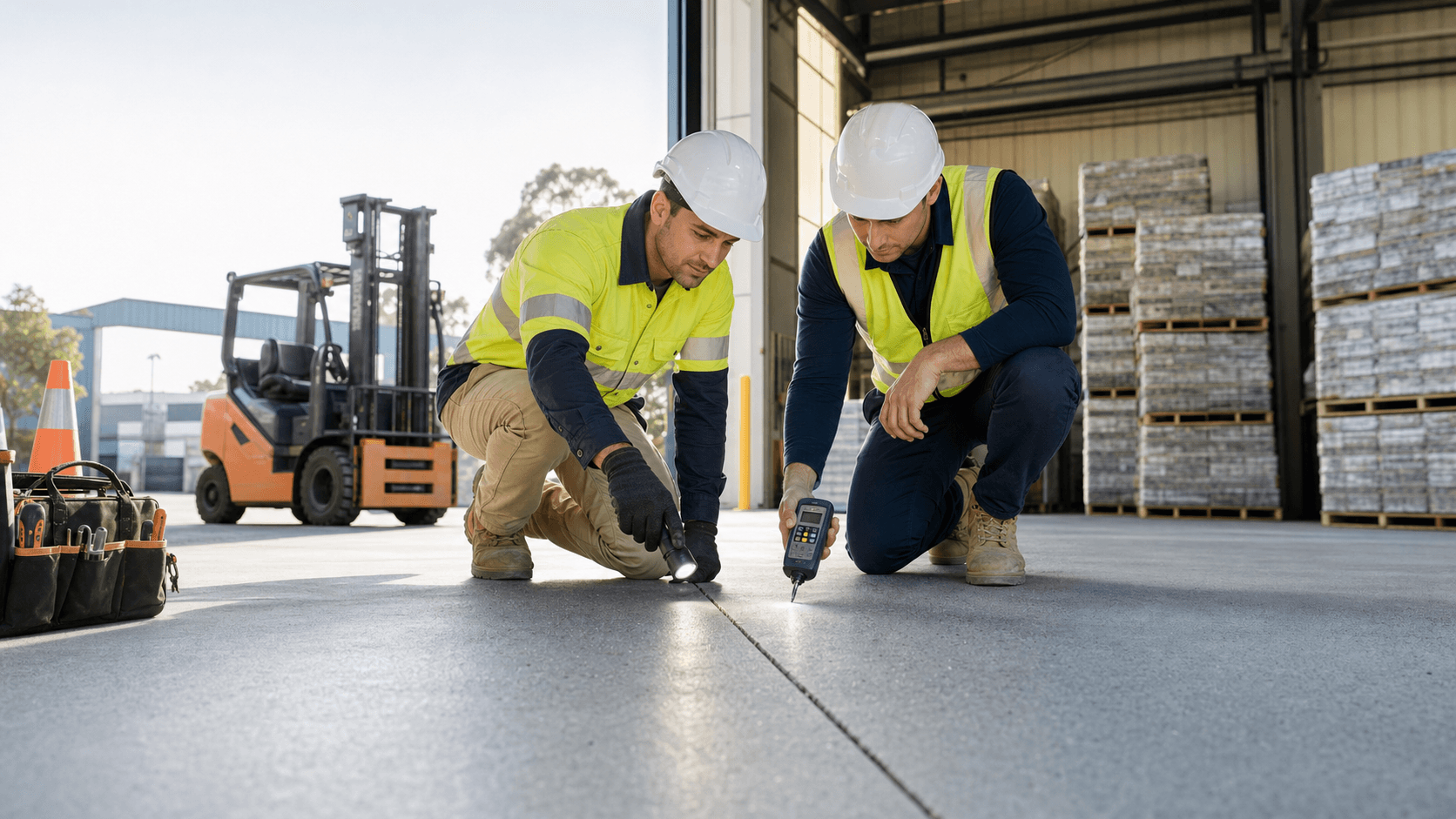
Even the best industrial concrete in Perth needs some care. Regular inspections help catch small issues early, especially after wetter months or peak loading periods.
Useful checks include:
- Looking along joints for edge breakdown or spalling
- Tracking any cracks that appear or grow over time
- Watching for areas of polished wear or dusting
- Noting any ponding water after cleaning or rain
Simple, timely maintenance can slow down wear and tear. Professional cleaning methods that suit concrete, rather than harsh or unsuitable chemicals, help protect the surface. Joint resealing keeps out water and debris, and crack injection can stop fine cracks from opening further under traffic.
Surface resealing or re-coating, where needed, can refresh slip resistance and protect against chemicals or staining. A structured maintenance and repair plan, built with an experienced contractor, also supports WHS obligations by reducing slip and trip risks and helping keep access routes in good condition.
Planning Your Next Durable Concrete Project with Confidence
Before the wetter months arrive again, it is smart for facility managers and business owners to review existing slabs. Loading zones, main traffic aisles and external pavements often show distress first. Prioritising upgrades in those areas can make daily operations smoother and safer.
When speaking with potential contractors, helpful questions include:
- What experience do you have with industrial sites in Perth and across Western Australia?
- How do you assess local soil and drainage conditions?
- What design process do you follow for slab thickness, reinforcement and joints?
- How do you manage quality control from base prep through to curing and cutting joints?
At Condor Concrete Solutions, we work with Perth businesses that want concrete that lasts and supports how their sites actually operate. A tailored assessment and a clear, durable design can turn your next project into a long-term asset that works hard for your team and your business.
Get Started With Your Project Today
If you are planning a new facility or upgrading existing floors, we can help you choose the right specification for long-lasting performance. Explore our industrial concrete in Perth solutions to see how Condor Concrete Solutions supports demanding commercial and industrial environments. When you are ready to discuss your project, simply contact us and we will provide clear advice, timelines and costs.